
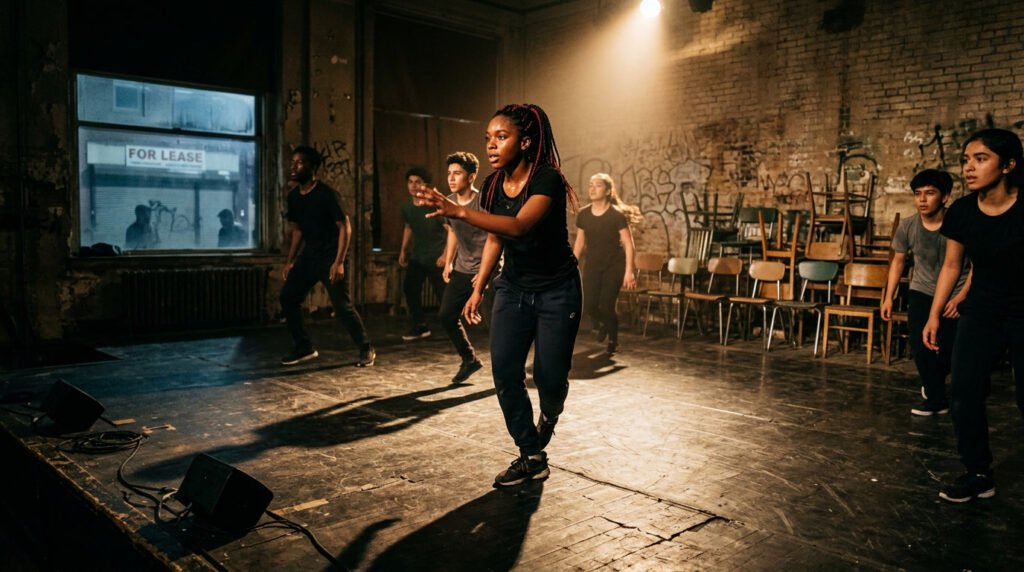
Across the country, the performing arts are at a crossroads. Economic pressures, shifting educational priorities, and widening inequality are changing how young people—especially those in under-resourced communities—experience creativity. In places like Queens, NY, where cultural diversity is a source of pride, but funding remains uneven, the decline in arts access threatens not just artistic futures but also community identity and youth empowerment.
The State of the Performing Arts in Today’s Economy
The performing arts world is still finding its footing after the pandemic. Rising costs, inflation, and shrinking public funding have forced many organizations to scale back or close their doors. According to the National Endowment for the Arts, employment in the sector still hasn’t returned to pre-pandemic levels, and smaller community-based groups have been hit the hardest.
Schools are feeling the strain too. The 2026 federal budget proposal reduced or merged several arts education programs, leaving many low-income districts without dedicated funding. That means students in wealthier areas can still access private lessons or after-school programs, while those in struggling neighborhoods are left behind.
Why It Matters for Disenfranchised Youth
For many young people, the performing arts are more than extracurricular activities—they’re lifelines. Research consistently shows that arts participation boosts academic performance, emotional well-being, and social connection. Yet, in too many schools, arts programs are the first to go when budgets tighten.
In Queens, one of the most culturally diverse places in the country, many public schools don’t have full-time arts teachers or proper performance spaces. Families already facing economic hardship often can’t afford private instruction. As a result, countless young dancers, actors, musicians, and playwrights lose access to the very programs that could help them build confidence, discipline, and a sense of purpose.
Thankfully, community organizations are stepping up. The Jamaica Center for Arts and Learning (JCAL), Glow Cultural Center, and others are among those offering free or low-cost arts education. But these nonprofits face their own uphill battles, relying on grants and donations to keep their doors open.
The Ripple Effect on Communities
When arts access declines, the impact goes far beyond individual students. The creative economy contributes billions to New York City’s GDP, and the performing arts are a vital part of that ecosystem. Excluding young people from underrepresented backgrounds means losing future innovators and storytellers who reflect the city’s diversity.
The absence of arts in schools also weakens community bonds. Performing arts programs often serve as safe spaces where youth can process trauma, explore identity, and connect across cultures. Without them, communities lose vital platforms for dialogue, healing, and shared expression.
Queens: A Story of Resilience
Despite these challenges, Queens continues to shine as a hub of creativity and resilience. Local theaters, cultural centers, and youth programs nurture emerging talent every day. Performing arts Initiatives give young artist the chance to share their vision, their stories, and passions with organizations such as the Astoria Performing Arts Center and the Boys & Girls Club of Metro Queens providing accessible creative outlets.
Still, community programs alone can’t replace the reach of public-school arts education. Real change requires policy action—restoring arts funding, integrating creative learning into core curricula, and supporting the local organizations that serve vulnerable populations.
The Urgent Call to Protect the Future of Performing Arts Education
Across the nation, performing arts programs are struggling to survive. Yet the arts remain one of the most powerful tools for self-expression, cultural preservation, and social connection—especially for young people in marginalized communities.
In Queens and beyond, organizations are working to ensure that youth have access to creative opportunities that build confidence, discipline, and cultural pride. These programs are not luxuries; they are lifelines that help young people find their voices and tell their stories through performance, writing, and movement.
Recent national conversations highlight just how urgent this work is. PBS NewsHour’s 2025 segment “NY Arts Program Brings Harmony to Low-Income Students” shows how free music education transforms lives in underserved neighborhoods. PBS’s “The Importance of Art Education and Inclusivity in Teaching” (2025) features Dr. Cierra Kaler-Jones discussing how inclusive, justice-centered arts education fosters belonging and resilience. And Donna Walker-Kuhne’s 2024 PBS interview, “The Importance of Creating Diverse Programming at NJPAC,” underscores the need for representation and equity in performing arts spaces.
These stories remind us that equitable access to arts education isn’t just possible—it’s essential. Now more than ever, communities must protect and defend the future of the performing arts by passing on these skills to the next generation. That means creating and adapting innovative alternatives in schools, community performing arts centers, and local organizations—spaces where creativity can thrive regardless of income or background.
By investing in youth arts education today, we’re safeguarding the cultural and creative legacy of tomorrow. The performing arts aren’t just about entertainment—they’re about empowerment, identity, and the shared human experience that connects us all.
Watch the Story
PBS NewsHour – “NY Arts Program Brings Harmony to Low-Income Students”
Published: April 2025
Available at: weta.org/watch/shows/pbs-newshour/pbs-newshour-ny-arts-program-brings-harmony-low-income-students
Sources
- National Endowment for the Arts. Arts Education and Access Report, 2026. arts.gov
- Columbia Political Review. The Future of Arts Education Funding in the U.S., February 2026. cpreview.org
- Afro-American Newspaper. Baltimore Arts Education Cuts Deepen Inequity, 2025. afro.com
- Americans for the Arts. Arts Education Navigator Series. americansforthearts.org
- NYC Arts in Education Roundtable. Historic Arts Education Investment in FY2026 Budget, 2026. nycaieroundtable.org
- Children’s Defense Fund. The State of Arts Access in Low-Income Schools, 2025. childrensdefense.org
- Jamaica Center for Arts and Learning. Annual Report 2025. jcal.org
- Ensemble News. Long-Term Impact of Youth Community Arts Programs, April 2026. ensemblenews.org
- WIF Talents. Arts in Education Statistics, 2025. wifitalents.com
- Council of the City of New York. FY2026 Budget Overview. council.nyc.gov